What happened
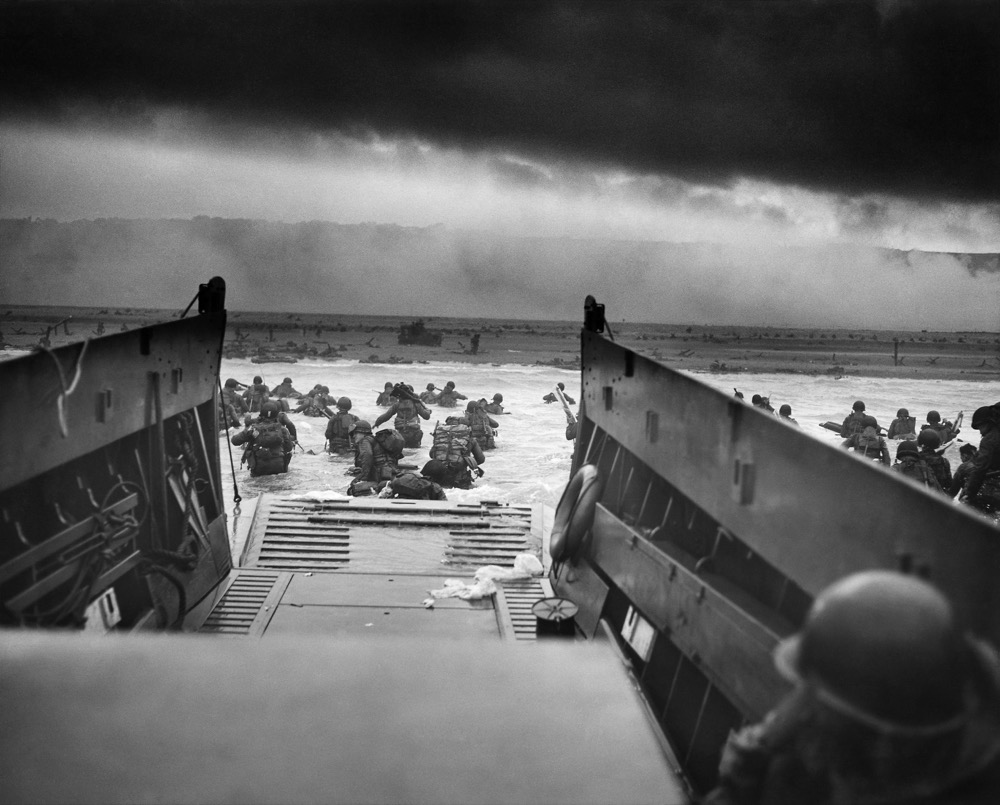
On June 6, 1944, roughly 156,000 Allied troops landed by sea and air in Normandy in the opening assault of Operation Overlord, the largest amphibious invasion in history. Five beachheads (Utah, Omaha, Gold, Juno, and Sword) were attacked while airborne forces landed inland. Omaha was the costliest beach and came closest to disaster, but small groups fought their way off the shore and through the bluffs. By nightfall the Allies had secured a foothold in France. Operation Fortitude and related deception measures helped convince German commanders that the main invasion might still come at the Pas-de-Calais.
Going Deeper
Omaha's bloodiness relative to the other four beaches has driven decades of analysis: the draws between bluffs, an intact German division that Allied intelligence had partially detected but underweighted, the decision to launch amphibious tanks too far out in heavy seas, and a bombing run that overshot the defenses have all been assigned shares of blame. Historians credit the recovery not to generalship but to small-unit improvisation: destroyers coming dangerously close inshore to fire point-blank, and junior leaders forcing gaps up the bluffs. The first-wave experience entered popular memory largely through Saving Private Ryan, which historians treat as emotionally faithful and factually compressed. Beneath the memorials, the beach itself still yields ordnance and shrapnel; the sand contains measurable shrapnel-derived iron and glass beads formed by explosions.
Three new battles every day. Tap the globe where each one happened.
Play today's battles