What happened
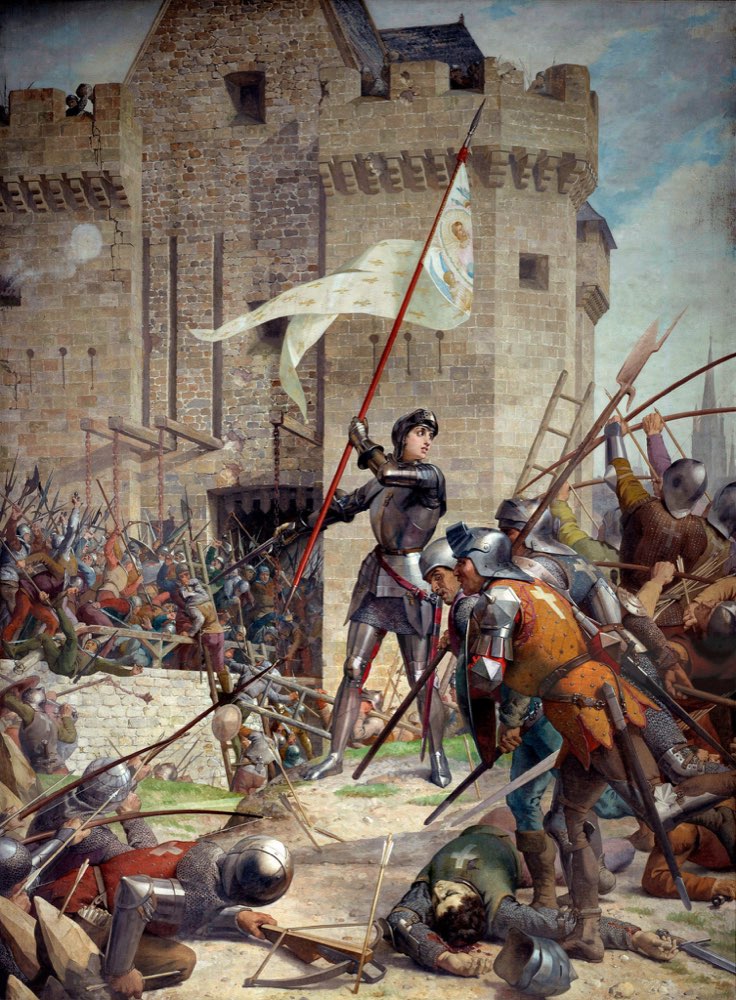
On May 8, 1429, the English abandoned their siege of Orléans, nine days after a teenage peasant girl arrived inside the walls claiming a divine commission to save France. The English had never had the numbers to encircle the city fully, and their line of forts depended on a captured bridgehead called Les Tourelles; Joan of Arc's presence turned a stalled defense into a series of aggressive sorties that took the outlying forts one by one. She was wounded by an arrow at Les Tourelles, returned to the assault, and the fort fell that evening. The English withdrew the next morning without giving battle. Within three months Charles VII was crowned at Reims, and a war the English had been winning for a decade began to run the other way.
Going Deeper
Joan is the best-documented commoner of the Middle Ages, because two church trials produced verbatim testimony: the 1431 condemnation record and the 1456 nullification inquiry, in which dozens of Orléans veterans described her under oath a quarter-century later. Historians still argue over what she actually commanded, since the surviving accounts run from a talisman carried by the army to a genuine tactical driver of the sorties, and the nullification testimony was gathered by people with reason to rehabilitate her. The lifting of the siege was strategically real regardless: English resources were overstretched and the Loire line collapsed within months. Orléans has commemorated the day every May 8 since the 1430s, one of Europe's longest-running civic festivals, and Joan's afterlife as a symbol claimed in turn by the Republic, the Church, Vichy, and the modern French right has generated a scholarly literature of its own.
Three new battles every day. Tap the globe where each one happened.
Play today's battles