What happened
Before dawn on September 13, 1759, British troops under James Wolfe scaled a poorly guarded path up the cliffs west of Quebec and formed for battle on the Plains of Abraham, ending a frustrating summer-long siege with one throw of the dice. Montcalm chose to attack immediately with the troops at hand rather than wait for reinforcements; the advancing French line was shattered by close-range British volleys, and the battle was effectively decided in under half an hour. Both commanders were mortally wounded (Wolfe dying on the field in victory, Montcalm the next morning in the city), a symmetry that made the battle instantly legendary. Quebec surrendered five days later, and though France won a battle outside the walls the next spring, the fall of New France was sealed at the 1763 peace. The battle's consequences (British North America, and a conquered French Canada inside it) are still being negotiated in Canadian politics today.
Going Deeper
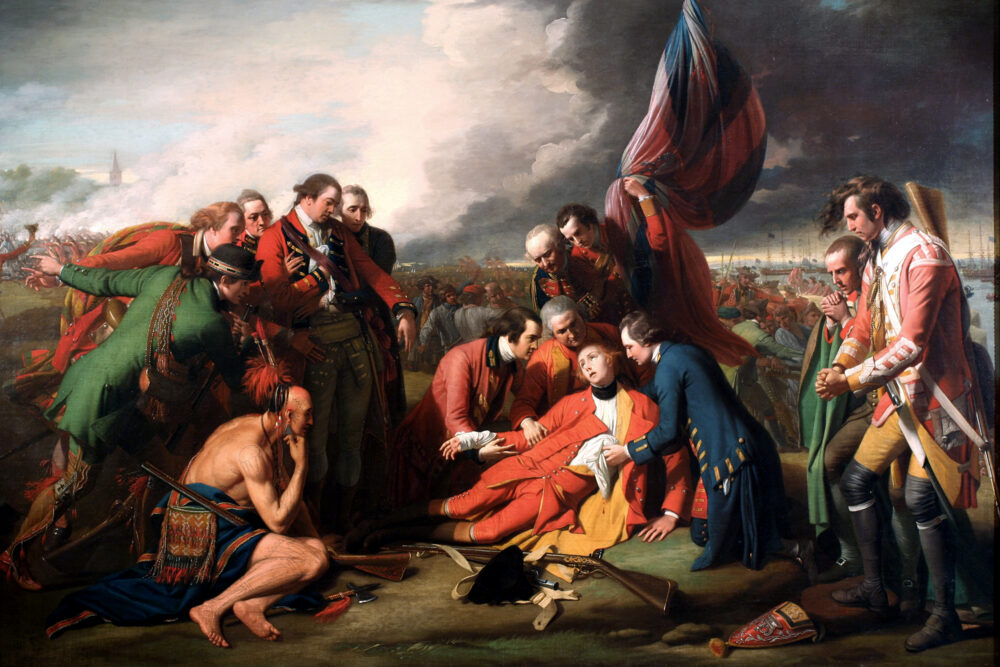
The Plains of Abraham carries more live political weight than almost any eighteenth-century battle: in Quebec it is the Conquest, the founding trauma of French-Canadian nationalism, and commemorations remain genuinely fraught; a planned 250th-anniversary reenactment in 2009 was cancelled under protest. Historiography has complicated both heroes: Wolfe's summer campaign included the systematic burning of Canadian farms, and scholars debate whether his cliff gamble was genius or a desperate move that Montcalm then lost faster by attacking prematurely instead of waiting for Bougainville's column. Benjamin West's famous 'Death of General Wolfe' painting, historically inaccurate by design, taught the empire how to grieve a hero and shaped battle art for a century. Recent scholarship also restores the war's Indigenous dimensions, and the battle's aftermath for France's native allies, to a story long told as purely Anglo-French.
Three new battles every day. Tap the globe where each one happened.
Play today's battles