What happened
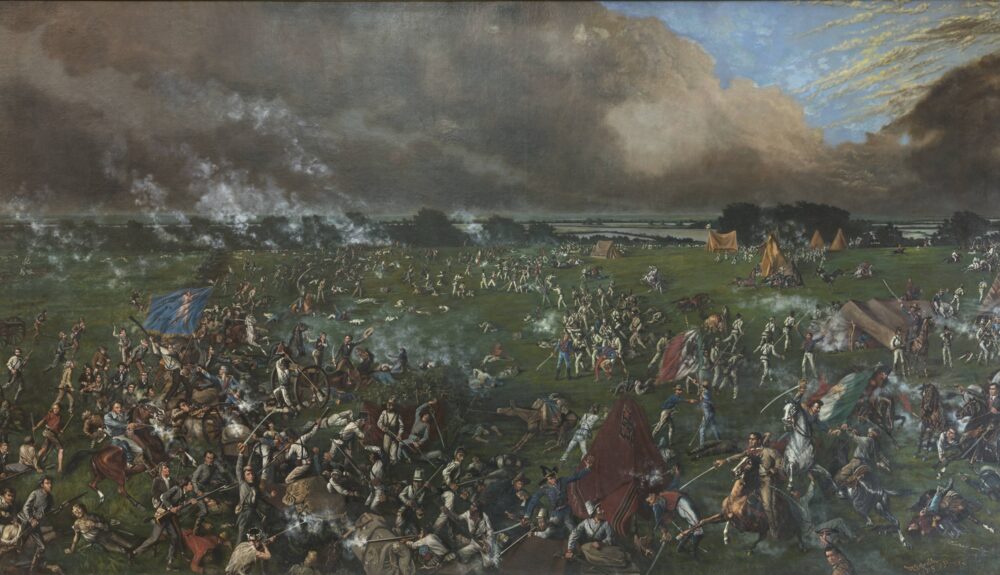
On April 21, 1836, Sam Houston's Texian army surprised Santa Anna's division during the afternoon siesta beside the San Jacinto marshes and destroyed it in about eighteen minutes. After weeks of retreat that his own men called the Runaway Scrape, Houston attacked across open grass behind a screen of trees, and the shouted memory of the Alamo and Goliad turned the rout into a slaughter: Mexican soldiers were killed in the boggy margins long after resistance ended, a dark edge the triumphant telling long minimized. Santa Anna was captured the next day in a private's uniform and, as president of Mexico, signed away his army's position to save his life. The battle won Texas de facto independence at astonishingly low Texian cost, though Mexico repudiated the coerced treaties and the border stayed contested until the U.S.-Mexican War a decade later.
Going Deeper
San Jacinto's brevity hides real historiographic argument: Houston's long retreat is read by admirers as Fabian patience and by critics, including many of his own officers at the time, as drift rescued by opportunity, and the decision to attack in daylight across open ground remains debated as brilliance or luck. The post-battle killing of surrendering and fleeing soldiers is now treated squarely by historians as a massacre phase, complicating the clean revenge narrative. Scholarship also situates the revolution itself in harder light, since Mexican abolition of slavery was among the tensions driving Anglo-Texian separation. The 570-foot monument on the site, taller than the Washington Monument, is its own study in how Texas built memory at civic scale.
Three new battles every day. Tap the globe where each one happened.
Play today's battles