What happened
On September 1, 1870, German armies encircled the French Army of Châlons at Sedan and compelled the surrender of over 100,000 men, along with Emperor Napoleon III himself, who was present with the army and gave himself up to the King of Prussia. Moltke's forces ringed the town with artillery on the surrounding heights and methodically destroyed every breakout attempt, including cavalry charges of famous futility at Floing. The emperor's capture collapsed the Second Empire within days; Paris proclaimed a republic and fought on through a winter of siege. Sedan made German unification a battlefield fact (the empire was proclaimed at Versailles months later) and planted the humiliation that helped poison Franco-German relations up to 1914. The town would see catastrophe again: the decisive German breakthrough of 1940 crossed the Meuse at Sedan.
Going Deeper
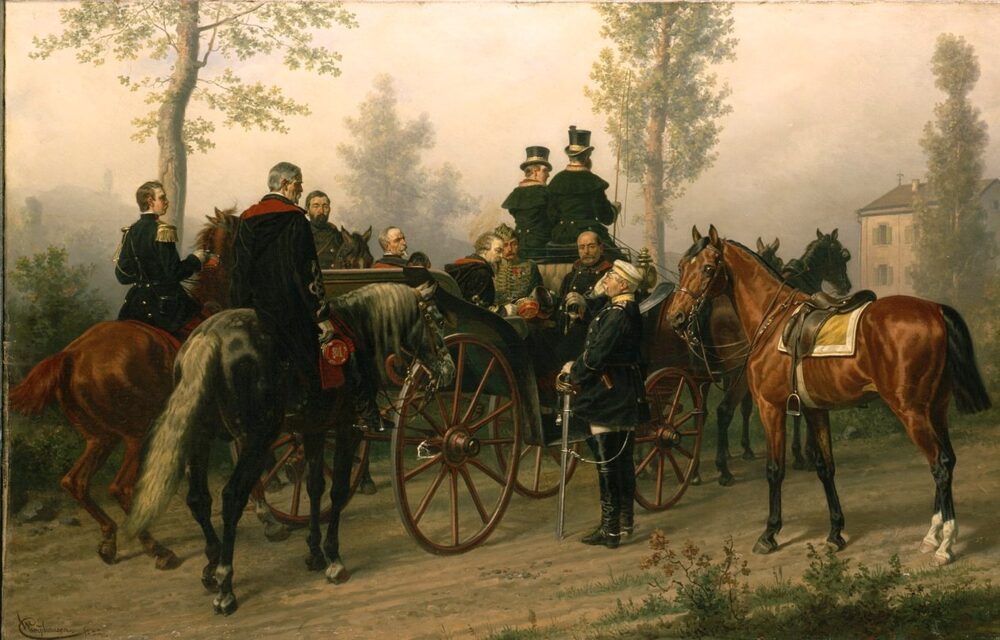
Sedan is a hinge that historians read forward and backward: forward to the wars its outcome incubated (a unified Germany, a revanchist France, and 1940's grim echo on the same ground) and backward as the vindication of Prussian institutions, the general staff, railway mobilization, and steel breech-loading artillery, which armies worldwide then scrambled to copy. Scholarship emphasizes how much the encirclement owed to French command paralysis, with MacMahon wounded early and successors countermanding each other while the ring closed. The day generated durable set-pieces (Wilhelm's reported pity watching Wimpffen's breakouts fail, Bismarck's meeting with the captive emperor in a weaver's cottage), each polished in memoir and painting. Germany celebrated 'Sedantag' as a national holiday for decades, a case study in how victor states institutionalize a battle.
Three new battles every day. Tap the globe where each one happened.
Play today's battles