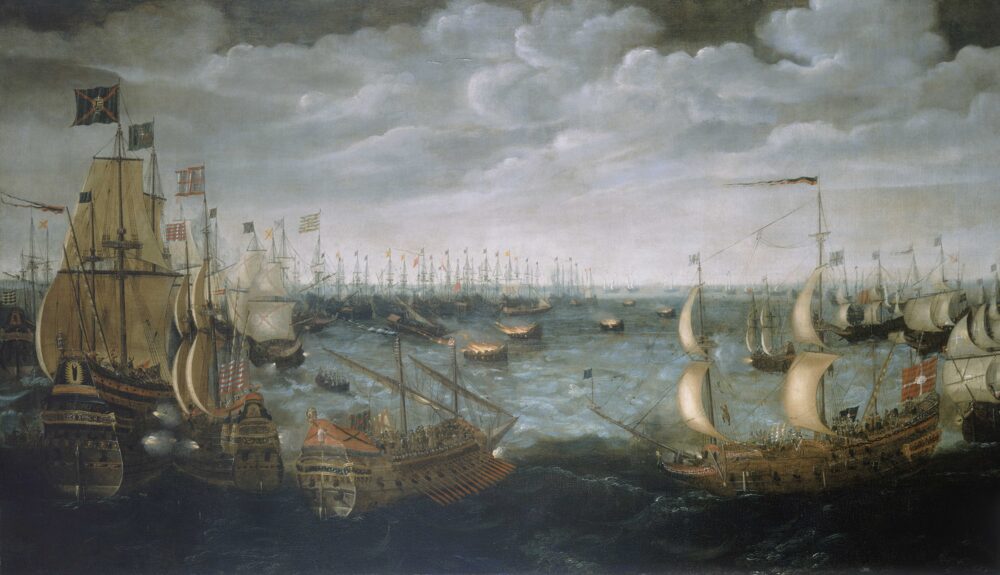
What happened
In the summer of 1588, Philip II of Spain sent some 130 ships to escort an invasion army to England, and the campaign ended in one of history's most famous naval disasters. After a week of running fights up the Channel, English fireships scattered the Armada from its anchorage off Calais, and the next day's battle at Gravelines battered the Spanish ships and drove them into the North Sea. Unable to turn back, the fleet was forced to sail home around Scotland and Ireland, where Atlantic storms wrecked dozens of ships on the coasts; far more Spaniards died of shipwreck, hunger, and disease than English gunfire. Elizabeth's Tilbury speech and the 'Protestant Wind' entered English legend immediately. The war itself ground on for another sixteen years, and Spain remained a great power, but the invasion of England never came.
Going Deeper
Armada historiography has spent decades dismantling the David-and-Goliath legend: England's fleet was larger in hulls than Spain's, better gunned for the fight it wanted, and fighting at home, while the Spanish plan's fatal flaw, rendezvousing with Parma's army from shallow ports the deep-draft fleet couldn't cover, was structural, not providential. The 'Protestant Wind' framing was deliberate propaganda on both sides of a confessional war, and Philip promptly rebuilt; later armadas in the 1590s were beaten by weather too, and England's own 1589 counter-armada was a comparable disaster that the English telling quietly forgot. Marine archaeology on the Irish wreck sites, the Girona's treasures above all, transformed modern understanding of the fleet's men and material. Elizabeth's Tilbury speech survives only in a text recorded years later, and scholars still argue over its authenticity.
Three new battles every day. Tap the globe where each one happened.
Play today's battles