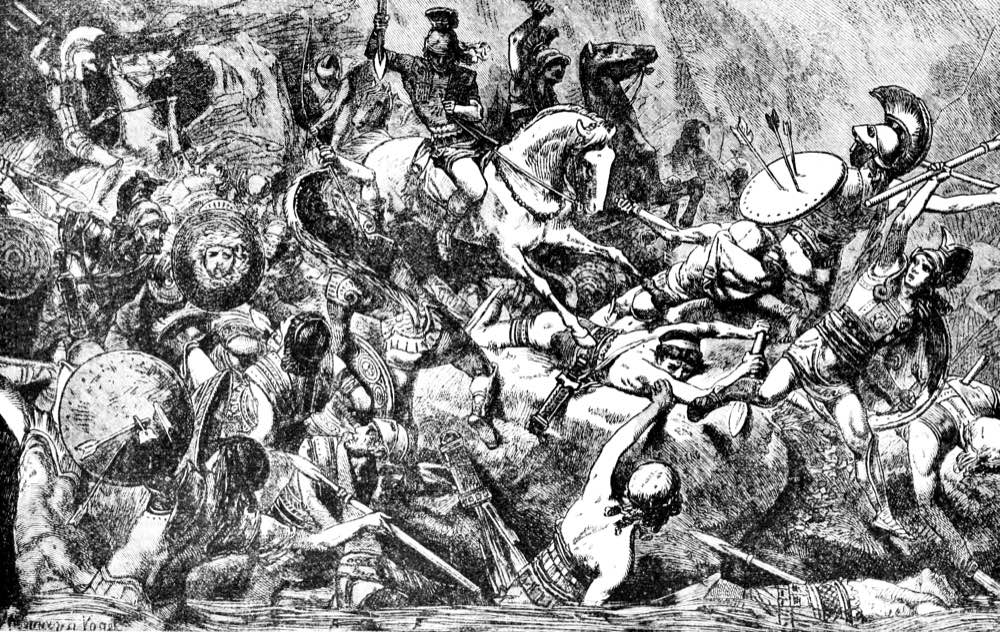
What happened
Athens sent an armada to Sicily in 415 BC to conquer a city that had done it no particular harm, and by 413 the besiegers were the besieged. A Spartan officer named Gylippus arrived and organized a defense that stopped the Athenian siege walls from closing, and the Syracusan fleet learned to fight inside a harbour where Athenian seamanship counted for less. When the last attempt to break out failed, the army burned what it could not carry and marched inland, and was hunted down at a river crossing. The generals were executed and the survivors sent into the stone quarries, where most died. Athens fought on for nine more years, but it never rebuilt what it lost here.
Going Deeper
Everything we know comes essentially from Thucydides, who shaped the disaster into the most sustained piece of tragic narrative in ancient historiography, and the power of that writing is itself a problem, since historians reading him cannot easily get behind a version so persuasively constructed. The detail most often repeated, that captives were fed or freed for reciting Euripides, comes from Plutarch centuries later and belongs to tradition rather than record. The quarries survive as a tourist site in Syracuse, which gives the ending a physical location in a way little else in the campaign has. The expedition has served as the standard cautionary tale about optional wars of choice fought far from home for reasons that shift during the fighting, invoked in American debates over Vietnam and again over Iraq, sometimes by people who had read Thucydides and sometimes by people who had read about him.
Three new battles every day. Tap the globe where each one happened.
Play today's battles