What happened
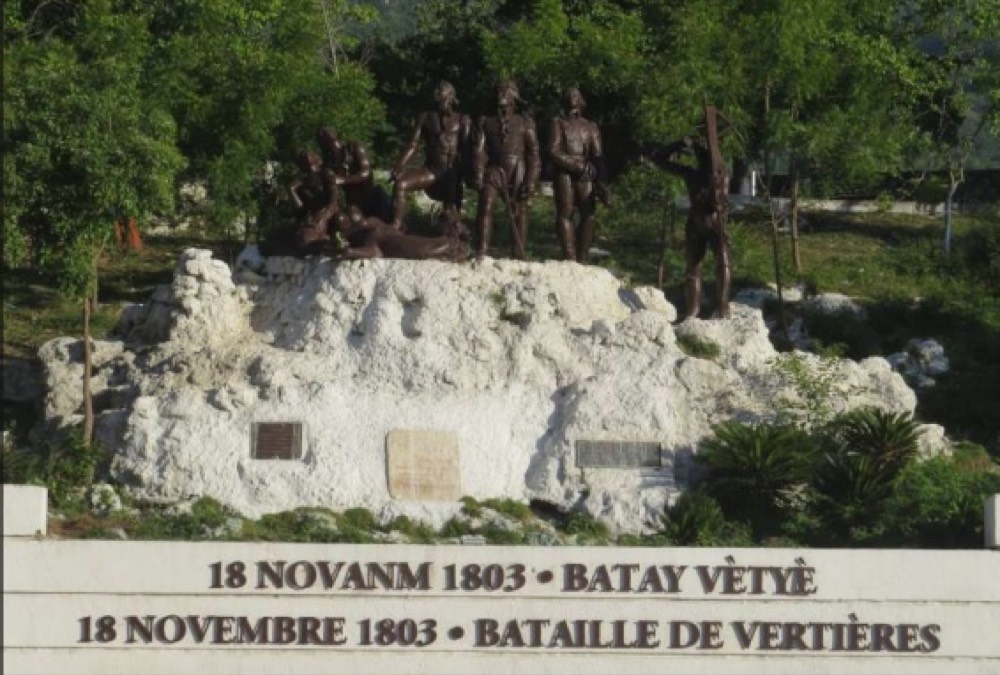
The last major battle of the Haitian Revolution was fought in rain on a hill outside Cap-Français on November 18, 1803, and it ended the only successful large-scale slave revolt in modern history to found a state. Jean-Jacques Dessalines' army attacked entrenched French positions repeatedly through the day; the assault on the strongpoint at Vertières is remembered for François Capois, who kept advancing on foot after his horse was shot from under him, and whom the French are said to have paused to salute. The French position was untenable by nightfall, and Rochambeau evacuated within days. Yellow fever had already killed most of the expedition Napoleon sent to restore French control and, by the law of 1802, slavery in the colony, including its first commander. Independence was declared on January 1, 1804, and the new republic took the name Haiti.
Going Deeper
Michel-Rolph Trouillot used this revolution as the central case in his argument that some events are not so much forgotten as unthinkable to the people recording them, and Vertières is the sharpest illustration: a decisive defeat of a European army by formerly enslaved soldiers that barely appears in the general histories of the Napoleonic period. Haitian sources and oral tradition carry the detail, including the Capois episode, whose famous French salute rests on tradition rather than a documented account. Historians continue to weigh how much of the French collapse belongs to yellow fever and how much to the revolutionary army's campaign, a debate that risks becoming another way of not crediting the victors. The date is Haiti's armed forces holiday and has been used and re-used by governments of very different kinds, and the indemnity France demanded in 1825 for recognizing the country's independence, paid off over more than a century, returned to international argument in the 2020s.
Three new battles every day. Tap the globe where each one happened.
Play today's battles