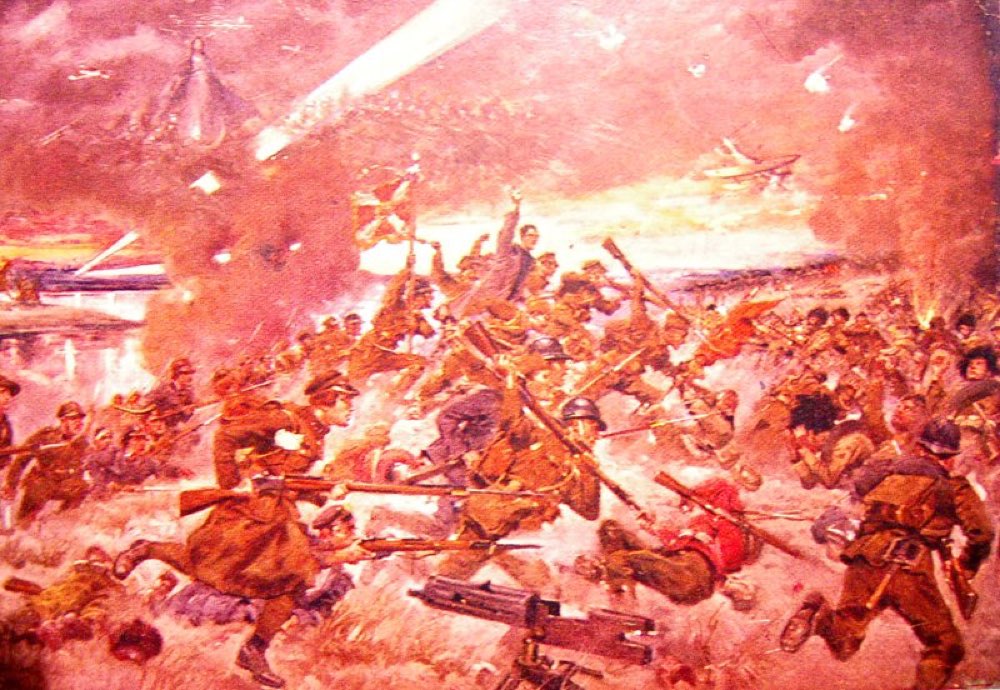
What happened
In August 1920 the Red Army reached the outskirts of Warsaw, and most foreign observers expected Poland, independent for barely two years, to fall within the week. Instead Józef Piłsudski held the river line, pulled a strike force out of the fighting, and drove it north into the gap between two Soviet armies, collapsing the entire offensive in three days. Polish cryptanalysts had been reading Red Army radio traffic for months, which is why the gap was known to be there. The Soviet advance never recovered, the Treaty of Riga fixed the border the following spring, and the export of revolution westward stopped at the Vistula. Piłsudski's political opponents named the victory the Miracle on the Vistula, crediting providence rather than the marshal, and the name stuck.
Going Deeper
For forty years this battle was close to unmentionable in Poland, since a communist government could not comfortably commemorate the defeat of the Red Army, and serious Polish scholarship on it only became possible after 1989. Authorship of the counterattack plan is still disputed between Piłsudski, his chief of staff Tadeusz Rozwadowski, and the French mission under Maxime Weygand, with each national historiography favoring its own candidate. The codebreaking dimension was declassified and published only in the 2000s, which shifted the story from improvisation and providence toward intelligence, and remains under-integrated into popular accounts. Edgar d'Abernon's description of Warsaw as the eighteenth decisive battle of world history is now cited mostly as a specimen of decisive-battle rhetoric, though the counterfactual it points at is taken seriously.
Three new battles every day. Tap the globe where each one happened.
Play today's battles