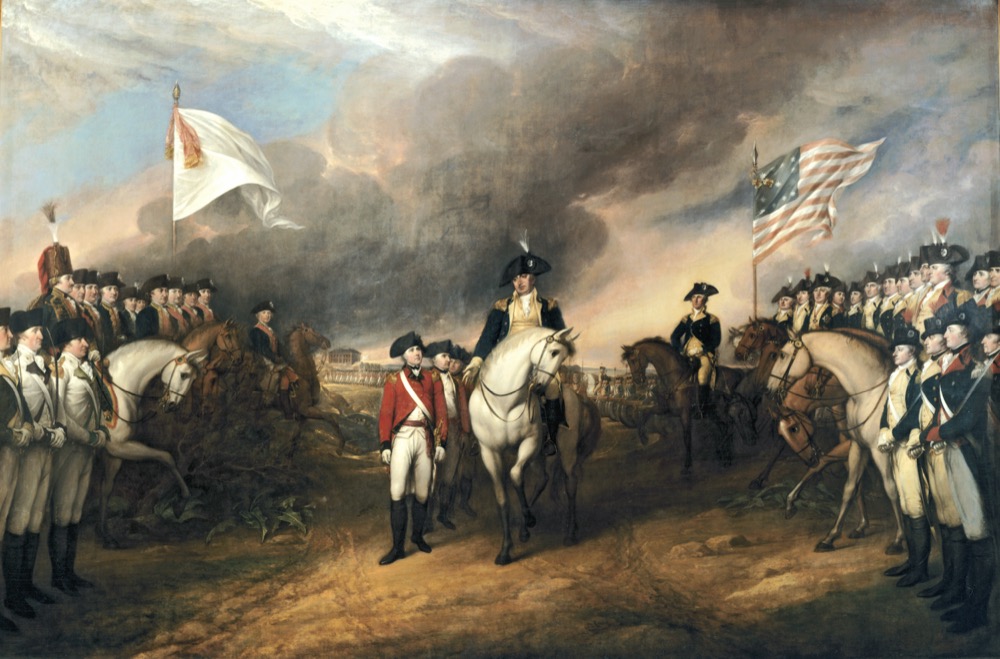
What happened
In the autumn of 1781, George Washington's Continental Army and its French allies raced south to trap General Cornwallis's British army on a Virginia peninsula while a French fleet sealed off Chesapeake Bay behind him. Cut off from rescue by sea and pounded by siege artillery, Cornwallis surrendered over 7,000 men on October 19. Legend has it a British band played 'The World Turned Upside Down' as the garrison marched out to stack arms. Though the war formally dragged on two more years, Yorktown broke Britain's will to continue, and American independence was won in the peace that followed.
Going Deeper
Yorktown is the American Revolution's clearest lesson that the war was won by coalition: the trap required Washington's army, Rochambeau's French troops, and above all de Grasse's French fleet winning the Battle of the Chesapeake two weeks earlier, a naval action with no American ships that historians rate among the most consequential in U.S. history. French engineering ran the siege by the European book, and among the regulars in the allied lines the French slightly outnumbered the Continentals, facts the nineteenth-century American telling steadily minimized. The 'World Turned Upside Down' surrender-music story rests on shaky, late testimony. Scholarship has also darkened the ending: enslaved people who had fled to British lines at Yorktown faced smallpox and re-enslavement in the aftermath, a strand of the story only recently given full weight.
Three new battles every day. Tap the globe where each one happened.
Play today's battles